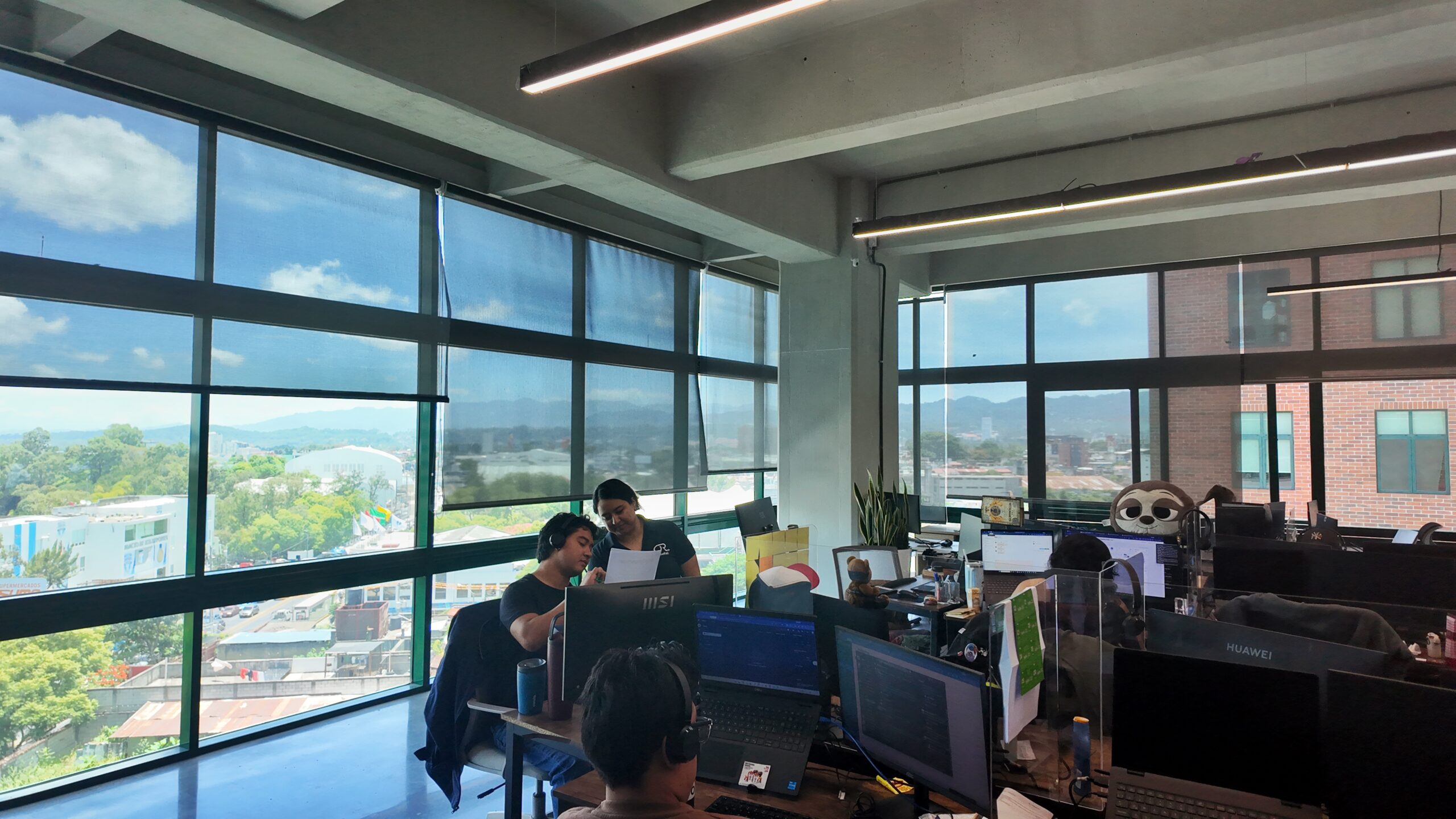
That title probably made you do a double take. Isn’t KIVO built entirely on connecting U.S. companies with talent working from somewhere else? Technically, yes. But we don’t call it “remote work,” and it’s not a matter of semantics. The phrase “remote work” carries a set of assumptions that describe exactly what we’ve built our model to avoid. So let’s talk about what that phrase usually means, why it so often disappoints, and what we do instead.
What “Remote Work” Usually Means
When most companies picture remote work, they picture a person alone. Someone at a kitchen table, logging in from home, disconnected from any real team, managed by a status update and a hope that they’re actually working. That version of remote work has a well-earned reputation for being isolating and inconsistent. People drift. Accountability blurs. Culture evaporates, because you can’t build a shared way of working out of a dozen people who never share anything but a Slack channel. When “remote” means “scattered and alone,” the results are exactly what you’d expect: uneven, and hard to trust.
Distance Was Never the Problem. Isolation Was.
Here’s the reframe. The thing that makes remote work fail isn’t the physical distance from your office, it’s the isolation of the person doing the work. A team member sitting alone with no colleagues, no culture, no structure, and no one to turn to will underperform whether they’re across the country or across the street. The mistake companies make is treating distance and isolation as the same thing. They’re not. You can be far away and deeply connected, or right down the hall and completely on your own. Once you separate those two ideas, the whole model changes.

What We Do Instead
Our people don’t work in isolation. They work as part of a real team, in a real environment, with the structure, management, and culture that make good work the default instead of the exception. They have colleagues beside them, leaders who know them, and a workplace that holds a standard. The same things that make an in-house team function, just located in Guatemala. So when you add a KIVO team member, you’re not adding a lone freelancer hoping for the best. You’re plugging into a team that already has its own gravity: shared habits, mutual accountability, and a culture that travels with the work. That’s the opposite of scattered and alone.
Why This Changes the Work You Get
For you, the difference is night and day. A person embedded in a real team asks a colleague when they’re stuck instead of guessing. They pick up the standard of the people around them instead of inventing their own. They stay, because belonging to something is what makes people stay, and every month they stay is another month of familiarity with your business you don’t have to rebuild. You get the flexibility of a team that works from elsewhere with none of the fragility that usually comes with it. The consistency you’d expect from an in-house hire, without the ceiling of only hiring who’s nearby.
We avoid the phrase “remote work” because it undersells what actually matters. The goal was never to have people work from far away. It’s to have great people, well supported, integrated into your team as if distance weren’t a factor. Distance is just logistics. Connection is the point. Pair that with formal employment, AI that clears the busywork, and a process that keeps quality consistent, and “remote” stops being a risk you tolerate and becomes an advantage you barely notice.
Where This Leaves You
If remote help has burned you before, it was probably the isolation, not the distance. Let’s talk about what it looks like to add people who work from Guatemala but never work alone.